The AI Optimist
ExplorePodcast overview and latest content
EpisodesBrowse the full episode archive

Podcast

  • Explore
  • Episodes

Recent Episodes

  • AI Swallows Our Wildness: Why It Can't Live on Echoes Alone
  • We're All Naruto: The Monkey Got 25%, While AI Creators Get Nothing. Why?
  • When Everything You Create Starts Sounding Like ChatGPT (And How to Fix It)
  • The Only AI With a Patent: Why Stephen Thaler's DABUS Got Erased from AI History
  • Getty Loses AI Copyright Case: What the UK Ruling Means for You - Creator or Not

Links

  • Apple Podcasts
  • Overcast

About

The AI Optimist

The AI Optimist

Powered byPodRewind

    All Episodes

    5 episodes

    AI Swallows Our Wildness: Why It Can't Live on Echoes Alone

    AI Swallows Our Wildness: Why It Can't Live on Echoes Alone

    Jan 30, 20261 minS3 E112

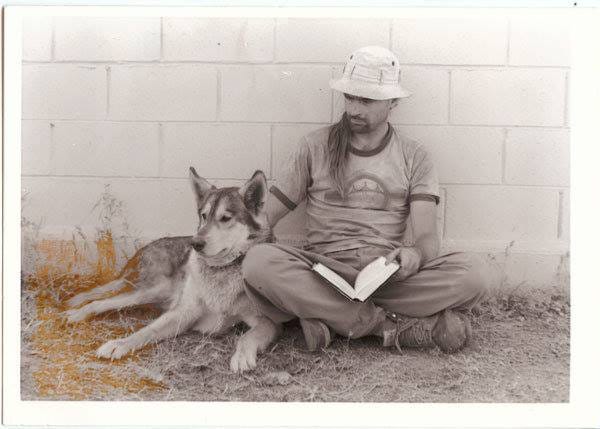
    I’ve raised hybrid wolves and they’re a lot like AI. Both come from something that used to be wild. There’s that first moment at the fence, when people see them. The breath stops. The body tenses. Something ancient recognizes what stands on the other side of the fence: wildness that doesn’t negotiate, power existing on its own terms. We build strong fences. It makes people feel safe enough to admire the wolves from a comfortable distance, like AI. You build the structure, like ChatGPT. You create the illusion of control. But wolves understand fences as a temporary inconvenience, nothing more. Right now, we’re fencing human creativity with AI, far more dangerous than fencing wolves. We’re eliminating wildness. And we’re doing it in the name of making creativity easier, predictable, and not better. The AI Voice Eating Itself Picture a canyon where each sound echoes. At first, the echoes add depth, resonance, and layers of meaning. And what happens when the only sound entering that canyon is the echo itself? When echo feeds echo feeds echo until the original voice vanishes completely? That’s where we are with AI and human creativity. Systems now learn from AI-generated text that isn’t always done by AI. Content created to feed algorithms teaching new algorithms what “good” looks like. Writing engineered for engagement becomes the standard for writing. Where everything sounds like everything else because everything is everything else. Maybe just slightly degraded copies, generation after generation. Biologists have a term for what happens when wolves breed only in captivity, when the gene pool narrows, when wildness gets engineered out: genetic collapse. The animals look like wolves. They might even act like wolves in controlled environments. But that something that made them wolves? It disappears. We’re watching creative collapse happen in real time. Now the original creative work that gave AI its power—decades of wild, gloriously messy human expression—is being systematically replaced by content designed to please the systems learning from that wildness in the first place. Wild Happens When Limits Become Possibilities Wildness isn’t nostalgia. It’s not a romantic Luddite rejection of technology or a call to return to typewriters and handwritten manuscripts. Wildness happens when people create for other people, without algorithmic approval as the invisible editor standing over their shoulder. You find wild in the researcher’s field notes before editing, full of crossed-out thoughts, marginal questions, uncertainty captured in real time. The oral history speaking in dialect and pause and emotion, not vectorized into predictable, standardized text. The essay contradicts itself because the writer discovers what they think as they write it. Wildness lives in friction. Think about everything we’ve smoothed away in the name of being as smart as AI: * The inconsistency showing how people think * The silence carrying as much meaning as speech * The regional twangs capturing cultural rhythms * The contradictions reveal understanding * The tangents connecting ideas nobody planned to connect These aren’t bugs in human communication. The imperfections are what makes creativity perfect. Coincidences connecting. They’re what made those decades of scraped internet content valuable for training AI in the first place. The unplanned moments. The authentic voice. The creative choice that didn’t calculate what would perform best. And we’re paving all of it. Like the song goes, “Don’t it always seem to goThat you don’t know what you’ve got ‘til it’s gone?They paved paradise, put up a parking lot.” Joni Mitchell You cannot protect wildness by destroying what lets it survive and thrive. Wildness needs space to exist. Not metaphorical space: the money space. Time and the freedom to create without fitting in as the primary driver. Content that follows algorithmic systems gets followers. Visibility. Maybe revenue. The creator engineering for engagement metrics gets to keep creating. The one who refuses? They just stop being able to afford to create. It’s not dramatic. It’s math, just like AI. Big Tech companies built their entire foundation on wildness they didn’t pay for. Decades of human expression taken without permission or compensation. Becoming commercial products worth billions. Now that there’s a market, we’re seeing the beginning of licensing 6 years too late. The writer spending three years on deeply researched work can’t eat licensing fees that come only if it’s a hit. The oral historian documenting a disappearing language can’t wait for AI companies to decide that data is valuable five years from now. The community needs that today. If we want wildness to survive, we must pay for the conditions that let it exist, not just the output it produces. Five Ways to Protect What We’re Losing This isn’t a technical puzzle with a clever solution. It’s a choice about what we value and what we’re willing to fight for. * Seek wildness intentionally. It doesn’t arrive by accident anymore. Field research, oral histories, raw interviews, handwritten archives, work untouched by technology yet (and there’s a lot of it) require pursuit and protection. Yes, it’s expensive. Yes, it’s slow. Not everything worth having scales like some Hyperscaler. These are the roots growing products and creation, not the farmer over harvesting a field that will take decades to grow again. * Design for friction, not around it. Algorithms optimize friction away because it looks like inefficiency. And wildness lives in spaces resisting perfect smoothness. Systems learning about inconsistency, silence, and contradiction create room for reality that doesn’t fit the model. Otherwise it’s clone armies of content repeating in endless loops. * Know where content comes from. Not all sources deserve equal weight. Models need to know whether text was written for humans or for algorithms. Tracking origin, intent, and degree of optimization lets systems value wild inputs appropriately. The risk is people gaming the system, engineering fake wildness. The response? Verification and transparency. Imperfect and better than pretending all content is the same, comes from the same place. One is copying, the other is inventing. * Curate, don’t just moderate. Curation is where creators and communities judge about what matters. When we let engagement metrics replace human taste, we pretend algorithms are neutral. They’re not. They’re biased toward virality (and in Meta and Google, the core of profitability), which we’ve turned into quality because it’s got big numbers. And everyone loves chasing big numbers, even if many of them are AI bots. * Let systems rest. What if models periodically stop ingesting new training data? Freezing forces reliance on existing knowledge and reveals where hallucination fills the gaps. Only then do you see what wild inputs really do. Systems that know what they don’t know are more valuable than systems that hallucinate with confidence. Wolves laugh at fences, so does AI I think about my hybrid wolves often. So smart, inventive, and wild. Like the human creativity we’re fencing in with AI. We optimize and extract value from expression, while undermining what lets authentic expression emerge. Admiring what AI can do with human creativity while starving the sources making those skills possible. This is entirely human choice. We’re deciding what kind of creativity survives. Fund the conditions where wildness thrives. Protect space for creation that doesn’t start with fitting into algorithms before taking the first step. Or we can keep building tighter fences, optimized outputs. Until all that’s left is AI listening to its own voice, wondering why everything sounds the same. Wildness taught me something those wolves demonstrate every day: you don’t plan to be authentic, you become so from experience that no current AI will ever touch. Because life requires more than a probable answer. It requires space, patience, and respect for what you don’t fully control. The question isn’t whether we can build better AI to capture and process human creativity. The question is whether we’re willing to protect the conditions where wildness survives, even when it’s impossible to scale. Even when it howls into the canyon and expects nothing back but silence. What are we choosing to protect? Thanks for reading The AI Optimist! This post is public so feel free to share it. This is a public episode. If you would like to discuss this with other subscribers or get access to bonus episodes, visit www.theaioptimist.com (https://www.theaioptimist.com?utm_medium=podcast&utm_campaign=CTA_1)
    AI training datacreative collapsehuman creativity
    We're All Naruto: The Monkey Got 25%, While AI Creators Get Nothing. Why?

    We're All Naruto: The Monkey Got 25%, While AI Creators Get Nothing. Why?

    Jan 9, 202611 minS3 E111

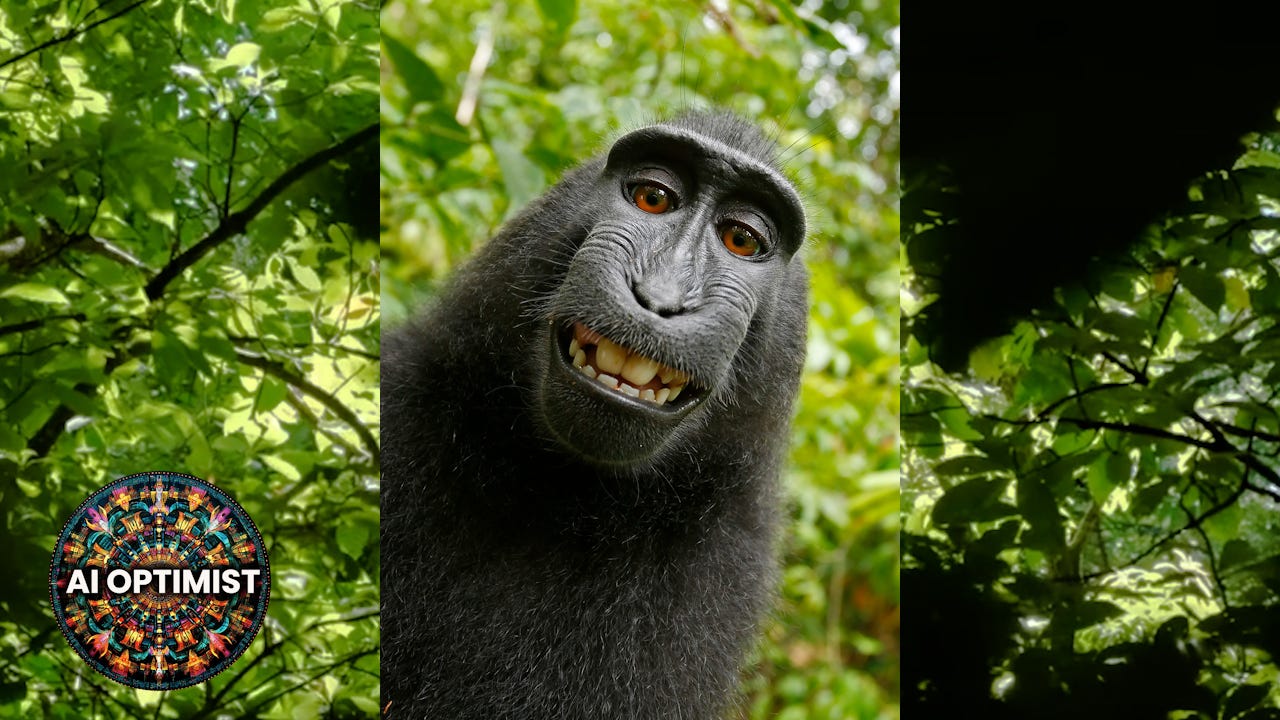
    What is the Naruto monkey selfie case and why does it matter for AI? A monkey takes a selfie. Years later, a federal judge must decide who owns it. In the courtroom, the judge asks with a straight face (https://law.justia.com/cases/federal/appellate-courts/ca9/16-15469/16-15469-2018-04-23.html)whether Naruto would be required by law to provide written notice to other macaque monkeys before joining a lawsuit. The courtroom laughs. Here’s what’s not funny: the initial ruling. No human author, no rights. Period. Right now, if you’re creating with AI, thelegal system says the same thing to you (https://www.theaioptimist.com/p/ai-gets-gettys-3b-brand-for-free). Spend hours refining prompts, making hundreds of creative decisions, shaping output until it’s exactly right. Someone else can take it, use it, sell it. You get nothing. When you admit AI was involved, your work loses protection. So you stay quiet. Many pretend we’re not using the tool reshaping creative work at a speed and volume no human can match (or maybe should). Why are we treating human creativity with AI the same way we treat a monkey with a camera? And what does the shame around admitting you use AI, from both sides, reveal about what’s broken? This isn’t about whether AI deserves copyright. It’s about whether creators working with AI deserve protection for their work. Right now, the answer is zero. Not 25%. Zero. The monkey got 25%. You get shame, silence, and zero protection. Let’s talk about why, and what that 25% reveals about creative rights with AI. What happened in the Naruto v. Slater settlement? Indonesia, 2011. Wildlife photographer David Slater sets up his camera in the jungle. Naruto, a crested macaque, grabs it and starts clicking. Many photos. Most are blurry, random, kind of what you’d expect from a monkey with a camera. But a few? Perfect. Composition, timing, expression. The kind of selfies humans spend ten tries to get right. They go viral. Wikipedia posts them as public domain with a simple explanation: the monkey took the photo, not the photographer. Slater objects. He set up the equipment. He created the conditions. He made the monkey photos possible. Then PETA sues on Naruto’s behalf. Not because they think the monkey deserves rights, but to make a point about animal rights and who controls creative output. The court doesn’t debate whether the photos are creative. They are. The court doesn’t question whether they have artistic merit. They do. The question is simpler: Without human creative control, is there anything to protect? The answer: No. Not because the work lacks value. Because the law was built for human creators, and nobody knows what to do when creativity crosses species. And in our case, when it crosses into working with machines. The case drags on for years. Slater’s exhausted. PETA wants a resolution. So they settle. 25% of future revenue from the photos goes to charities protecting crested macaques in Indonesia. Not because Naruto won. Because everyone wanted it to end. Not full ownership. Not recognition as the creator. Just a cut. The photographer keeps the rest, even though the monkey pressed the button. The monkey gets a percentage, even though the photographer created the conditions. Maybe the answer to “who owns this?” isn’t either/or. Maybe it’s not human OR monkey. Maybe it’s not human OR AI. Maybe when different forms of intelligence work together, even by accident, what does fair look like? Because right now, with AI, we’re not even asking that question. We’re just saying zero. = Should I admit to using AI in my creative work? Reality, you probably shouldn’t if you’re even asking the question. Not because using AI is wrong. Because admitting it sometimes costs. You create something with AI. Spend hours refining prompts, making creative decisions, shaping output. The Copyright Office’s position is clear: no human creative input that rises above AI’s contribution, no protection. How much is too much AI? Nobody knows. Nobody will tell you. You won’t find out until someone challenges your work or there’s money involved. Take Jason Allen’s Théâtre D’opéra Spatial. He ran 600 prompts through Midjourney, made hundreds of choices about composition and style, won a Colorado art competition. Then applied for copyright protection. Denied. AI-generated, so no protection. The 600 prompts didn’t matter. The creative decisions didn’t count. What’s a creator supposed to do? You write an article. Use AI to help with research, maybe structure, some editing. Do you mention it? Do you check a box on YouTube saying you used AI? Why would you? Admission means zero protection and convinces people the work isn’t really yours. Maybe it’s just scraped content from the internet, regurgitated. So you stay quiet. Everyone stays quiet. And we pretend we’re not using the tool reshaping creative work at speed and volume no human can match. Or maybe should. That’s the liar’s dividend. The reward for silence. We don’t measure human-created work by what tools were used. We measure it by whether it’s original, inventive, new. Whether we like it. Why is AI different? Fear. The Scarlet AI. There’s this idea that admitting AI involvement means you’re not a “real” creator. That it diminishes the work. That you’ll lose protection, respect, everything. Some people call creators using AI lazy or fake. Others like tech builders and AI engineers call creators greedy and entitled when they ask for permission, payment, and transparency about how their work trains these systems. Both sides are shaming. Both sides are wrong. And creators are caught in the middle, hiding their tools and their process because honesty is punished. The conversation about what’s possible when different forms of intelligence work together never happens. We’re stuck in either/or thinking: Human or AI. Real or fake. Creative or automated. What happens when different forms of intelligence learn to work together? Right now, we’re too afraid to even ask. Why don’t AI creators have copyright protection? Because the law is asking the wrong question. Courts keep asking: “Is it human enough?” When they should be asking: “Is it creative? Is it original? Does it show intention?” The legal system was built for a world where humans were the only ones making creative choices. Now we have tools that can generate, suggest, refine; suddenly nobody knows how to measure what the human contributed. So, they default to the simple rule: No human author, no rights. It’s the same logic that denied Naruto. The photos were creative. They showed artistic choices: framing, light, expression. But without a human holding the camera, the law had nothing to protect. We’re living that same logic right now. You make hundreds of creative decisions working with AI. You choose what works and what doesn’t. What to keep, what to throw away. That’s not accident. That’s intention. How much human involvement is enough? Who decides? Where’s the line? The Copyright Office won’t tell you. They’ll just evaluate your work after the fact and decide whether you crossed some invisible boundary between “tool” and “creator.” And the law can’t keep up. We’re still litigating cases from three, four, five years ago. AI evolves daily. By the time a court decides what was acceptable in 2021, we’re already working with completely different systems in 2026. The question isn’t whether AI deserves copyright. It’s whether creators working with AI deserve protection for the choices they’re making. Right now, the answer is: only if you can prove you did more than the AI did. Good luck measuring that. Try asking ChatGPT that. Could a 25% revenue model work for AI and creators? Naruto’s settlement wasn’t about who was right. It was about ending a fight nobody could win. The photographer didn’t get full ownership. The monkey didn’t get recognition as the creator. They landed on 25% of future revenue going to macaque conservation. Not because it was fair, because it was something. And that number didn’t come from judges or juries. It came from two parties trying to figure out what made sense when the rules didn’t fit the situation. How about applying that same thinking to AI? Right now, AI companies take trillions of pieces of creative work - articles, images, code, music - to train their systems. What comes out isn’t what went in, so it’s transformative. Fair use. Meanwhile, creators get nothing. No payment. No permission is asked. No transparency about what was used or how. And creators using AI get nothing either. No protection for the hours spent refining prompts and making creative choices. No way to prove, or move beyond human only right. What if both sides got something? What if a percentage of the trillions in compute costs went back to the creators whose work trained these systems? Not full ownership. Not a veto over AI development. Just a cut that acknowledges their work made this possible. And what if creators working with AI got protection for their output. Not full copyright, but something that recognizes the creative choices they’re making? The monkey got 25%. Photographers using AI get zero. The creators whose work trained the AI get zero. What if we stop arguing about who deserves what and start asking what makes sense when creativity isn’t cleanly human anymore? That’s not a legal answer. It’s a practical one. And right now, we’re not even having that conversation because we’re too busy shaming each other. What creative choices are you making with AI that nobody sees? We’re all Naruto now. Picking up tools we didn’t build, making creative choices, the law doesn’t know how to recognize. What are you not admitting you’re using AI for? What creative choices are you making that nobody sees because you’re afraid of what happens if you’re honest? That silence is the problem we need to solve. Not with more lawsuits. Not with more shame from either direction. But by talking about what works, what doesn’t, and what fair looks like when creativity isn’t cleanly human anymore. We’re teaching primates to use tablets. AI is writing poetry and making music people listen to. Intelligence and creativity are showing up in forms our grandparents couldn’t have imagined. We’re either going to keep pretending it isn’t or start building something admitting the reality: creativity knows no species barrier. And maybe that’s not something to fear. Maybe it’s something to figure out together. We’re monkeys learning to use a new camera called AI. We’re not just monkeys. But even if we are, we deserve better than nothing for our work. The conversation starts when the hiding stops. RESOURCES * Sulawesi Video (https://www.youtube.com/watch?v=s_Rvxq_v-Ao) - Restless Generation (Where Naruto was) * Monkey Selfie Lawsuit (https://en.wikipedia.org/wiki/Monkey_selfie_copyright_dispute) * Deezer/Ipsos survey: (https://newsroom-deezer.com/2025/11/deezer-ipsos-survey-ai-music/) 97% of people can’t tell the difference between fully AI-generated and human made music – clear desire for transparency and fairness for artists This is a public episode. If you would like to discuss this with other subscribers or get access to bonus episodes, visit www.theaioptimist.com (https://www.theaioptimist.com?utm_medium=podcast&utm_campaign=CTA_1)
    Naruto monkey selfiecopyright lawAI generated content
    When Everything You Create Starts Sounding Like ChatGPT (And How to Fix It)

    When Everything You Create Starts Sounding Like ChatGPT (And How to Fix It)

    Dec 26, 202511 minS3 E110

    Ever notice yourself reaching for AI before trying to think through something on your own? One sentence in an email, that’s all between me and the holiday weekend. Playing a live distractathon between things I must do and mind candy….I went for the candy. Not because I didn’t know what to say (https://www.theaioptimist.com/p/what-is-ais-perfect-question-prompting). Because I’d get distracted when I started. So I ask ChatGPT to finish it. Then the next one. Then the entire email. Few minutes later, I couldn’t draft anything without opening ChatGPT. And I’ve written a ton in my life. Now this passed, still I’m not alone. Many would be lost now if ChatGPT went away. Not likely, but still a ton of trust to put on something that’s not trustworthy yet. → People who once wrote easy to read emails, turn into corporate word salads→ People who made decisions in minutes now look to ChatGPT for confirmation (knowing they can’t trust the results).→ Creators who had strong voices can’t remember what they sounded like after AI cloning it all. One person told me: “I used to just... know what to write. Now I don’t trust myself to start without AI checking it first.” When we outsource the (https://www.theaioptimist.com/p/your-brain-beats-ai-how-to-make-chatgpt)thinking (https://www.theaioptimist.com/p/your-brain-beats-ai-how-to-make-chatgpt)part of writing something else gets weaker (https://www.theaioptimist.com/p/your-brain-beats-ai-how-to-make-chatgpt). The muscle turning rapid thoughts into clear sentences. The innate knowing when something sounds like you. It’s not like you wake up one day unable to think. More like using a paper map in a GPS world: * Reaching for AI before trying to figure it out yourself * Feeling foggy when you need to write something important * Not trusting your own judgment like you used to The cost of speed is your thinking and problem solving; your mind, perspective, and confidence. AI makes drafts in seconds, revises in seconds. Still we know speed and thinking aren’t the same thing, even if it’s really fun and easy to just use it. What if the tool didn’t make us faster, but did make us dependent. I’m not saying we abandon AI. I’m an advisor to one startup, and use it every day. Still the thing making us faster might also be making us... different. Now is that different in a good way, depends on the person. Here’s what I’m testing, how to be different in my actions, and improve with AI. Your Voice: Is It AI or Unfakeable You? Most people can’t describe their own voice. It’s like asking a fish to describe water. I’m one of the fish here. (And AI hasn’t been much help beyond the obvious.) Now let’s dissect it together. Not to criticize. To discover. I’ll share some of what came up for me, and play along, comment with questions. Everyone has their own way of using AI, which makes it less software and more you. TLDR Question 1: How do you start sentences?Do you lead with questions? Statements? Stories?Look at the first line of each paragraph. There’s a pattern. Question 2: What words do you overuse?Not “AI” or “business”; everyone uses those.I mean the weird ones. I say “seriously” too much. “Honestly.” “Look.”Those aren’t professional. They’re mine. Question 3: What do you explain that others assume?Some people over-explain. Some skip steps.Neither is wrong. But it’s distinctive. Question 4: What do you avoid saying?I don’t use corporate speak. No “synergy.” No “leverage.” No “circle back.”That’s not style advice. That’s who I am. Finding Your Voice with AI Here’s what you’re going to do after this session: Pull up your last 5-10 pieces of writing. Emails, posts, whatever feels natural. Not your “best” work. Your normal work. Read them out loud. Yes, out loud. Then answer (or ask AI to help you understand your own style): * What phrases show up repeatedly?Write them down. Those are your verbal tics. Your signature. * Where do you break the rules?Run-on sentences? Fragments? Starting with “And”?Don’t fix them. That’s your rhythm. * What would you never say?List the words and phrases that make you cringe.This is as important as what you DO say. * What stories keep showing up?I always come back to startups. To Remember.org. To the Camp Fire.Your recurring stories are your anchors. And also help AI get to know you from experience, but don’t send it everything. More below. The Invisible Erasure by Choice A sameness is spreading through web sites and socials, texts and emails, all in the same voice. Most don’t notice it’s happening and feel it’s better and easier than doing it themselves. Ask AI to revamp your writing following someone famous’s style, and it does exactly that. It makes your prose cleaner, more professional, less…you. AI isn’t trying to erase your individuality. It’s optimizes for patterns, and patterns mean “sounds like everyone else.” AI was trained on millions of documents that follow certain rules. When you ask it to “improve” your writing, it’s really asking: “How can I make this sound more like the average of everything I’ve seen?” Maybe you can know more about your own patterns and improve them, then relying on something to guide you to what everyone else likely would do. The Voice Map Exercise Here’s a practical exercise that works better than a prompt engineering guide: Pull up your last ten pieces of writing—emails, posts, articles, whatever feels natural to you. Your normal work, don’t cherry pick the best. Let AI help with that. Read them out loud. Your ear will catch patterns your eye misses. Have someone else read them out loud, or even better an Ai voice, then answer these questions: * What phrases show up repeatedly? Write them down without judgment. I say “seriously” too much, “honestly” even more, and start way too many sentences with “Look.” These aren’t professional. They’re mine. * Where do you break conventional rules? Maybe you use sentence fragments. Maybe you write run-on sentences that should be three separate thoughts but you like how they flow together with just commas because it matches how you think. These “errors” are your most distinctive patterns. * What would you never say? Make a list of words and phrases that make you cringe. I don’t use “synergy,” “leverage as a verb,” or “circle back.” This negative space, what AI should avoid, defines your voice as much as what you include. * What stories keep recurring? I always come back to startups, to Remember.org reaching schools worldwide, and to the Camp Fire. * Your recurring stories are your anchors. They’re the experiences shaping how you see everything else. * And AI never will have those anchors from experience…at least not soon. That’s your edge. The Two-Pass Method In the first pass, I use AI for idea generation. I ask for ten angles on a topic, ask for metaphors to explain complex concepts, and generate questions my audience might have; like an interview style where AI is interviewing me. I get raw material that I rarely use directly, and it lets me know what most others are saying over and over again. Knowing the average helps you not be average. In the second pass, I write in my own voice. I create ideas out of the initial rough questions and AI answers. More as a guide and also what will likely sound like everyone else.The research is faster. The writing remains distinctly mine, or else I become that AI middle dreariness of squeaky clean perfection without the flaws I bring."There is a crack in everything, that’s how the light gets in" Leonard Cohen, Anthem When It Matters, You Write If it matters, you write it. You write emails to important connections, nurture those rather than relying just on AI to do it for you. So how much of the overwhelming amount of communication and information do you really need?And is doing more and more of it solving the problem or adding to it? Let’s say you did let AI draft something. The draft is clean but generic; could have been written by anyone. Here’s how to put yourself back in: * Add one hyper-specific detail. Change “in a major city” to something from your experience. Use the name of the street, the color of the light at that time of day. You can’t fake real. * Break one rule on purpose. If AI gives three perfect paragraphs, split one into fragments. Or create a run-on sentence that violates rules but matches how you think through complex ideas. * Admit uncertainty. Add “I’m still figuring this out, but...” or “Here’s what I’m seeing...what’s your take?” AI rarely admits doubt. You can. * Add your signature phrase(s). Whatever your verbal tics that friends would recognize, include one. It’s like signing your work. What You’re Actually Losing by Letting AI Do It All For You It’s not just about “style”. You’re losing what makes people remember you. Who do you remember: 1. Perfect AI voice so clean it reeks of automation. To those receiving is you’re on auto pilot.2. Messy style with grammatical quirks they don’t fix, the stories activating the main point, the contradictions they show rather than hide. AI smooths all of this out. When you feed it your writing and ask for improvements, it treats your personal patterns as errors to correct. Your run-on sentence becomes three crisp sentences. Your conversational “Look,” gets deleted as unnecessary. Your specific memory of “Chicago in February, when even the lake looks angry” becomes “a cold city in winter.” The Better Prompts Trap Most people can’t describe their own voice. It’s like asking a fish to describe water. You’re so immersed in your patterns, they’re invisible to you. You don’t realize you’re losing your voice because you never knew what your voice was. And AI can help you do this in a way that’s hard for most to do it themselves. Working Together, Not Automation Think of AI like you’re making a documentary. AI is your research assistant. It can: * Find footage * Suggest angles * Draft rough cuts YOU decide: * What story to tell * What to emphasize * What to leave out If you let AI direct the documentary, it’ll be like the drone of perfection saying little. Without human error and habits, things get boring. Don’t be perfect, be you. Real Example I use AI every day for The AI Optimist. But here’s what I do vs. what AI does: AI’s job: * Research topics * Find counter-arguments * Generate headline options * Format transcripts My job: * Choose what matters * Write the actual script * Add the stories * Decide what sounds like me The work is faster. The voice is still mine. And I train it (along with Claude Skills) to do this so much faster and better. I improve my voice, quarterly at first to get it right. Your Action Step Take something you need to write. Instead of asking AI to write it: * Ask AI: “What are 10 ways to approach this?” * Pick the one that resonates * Write it yourself * Use AI to edit for clarity (not style) See how different it feels when YOU stay in control. The Big Picture We’re not trying to avoid AI. We’re trying to avoid becoming AI. There’s a difference between: * “AI writes like me” (you disappear) * “I write with AI’s help” (you remain) In a world where 90% of content sounds the same, the advantage is being undeniably, unfakeably YOU. AI can’t do that for you. But it can help you do it faster. This is part one of a series on adapting AI to how you think, rather than adopting AI like everyone else. Next: “Why You’re Working More Hours Since Adding AI (And What to Stop Doing).” Want to work through this live? I’m running bi-weekly sessions where we tackle real problems with real people. Ten minutes free, then deeper work for members. No frameworks, no corporate BS—just figuring out what AI should actually do for you. [Learn more about live sessions.] This is a public episode. If you would like to discuss this with other subscribers or get access to bonus episodes, visit www.theaioptimist.com (https://www.theaioptimist.com?utm_medium=podcast&utm_campaign=CTA_1)
    ChatGPTwriting voiceAI dependency
    The Only AI With a Patent: Why Stephen Thaler's DABUS Got Erased from AI History

    The Only AI With a Patent: Why Stephen Thaler's DABUS Got Erased from AI History

    Dec 5, 202512 minS3 E109

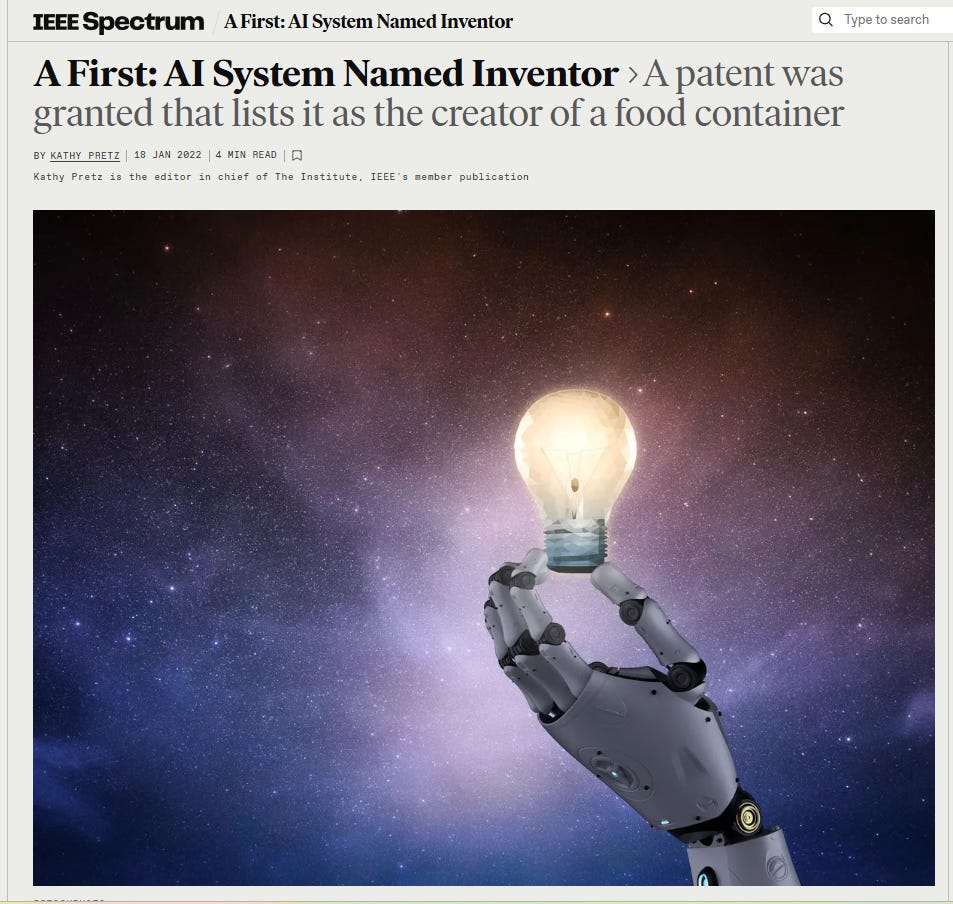
    There’s a founder who built AI designed to surprise him. Not to predict. Not to optimize. But to generate ideas he never trained it to create—by introducing controlled chaos into its neural networks. Earlier this year, I interviewed Stephen Thaler (https://www.linkedin.com/in/dr-stephen-thaler-3b88b/) for Episode 95 of The AI Optimist. What he told me shifted how I understand AI’s potential—and revealed why the current LLM-dominated conversation (https://www.theaioptimist.com/p/this-ai-paints-invents-dreams-growing) might be pointing us in the wrong direction. This isn’t about ancient history. It’s about what happens when an industry gets so fixated on one approach—prediction at scale—that other paths to machine creativity get drowned out by the hype cycle. Not because they failed, but because they asked uncomfortable questions that trillion-dollar valuations couldn’t afford to answer. The Pioneer We’re Not Hearing About [Podcast: 0:00-1:06] Stephen Thaler’s Creativity Machine was already generating novel designs in the 1990s—before Google existed, before social media, before anyone was talking about deep learning. By 2018, he was represented in courtrooms arguing that his AI system—called DABUS (Device for the Autonomous Bootstrapping of Unified Sentience)—deserved to be listed as an inventor on patent applications. Not him. The machine. The courts said no. US, UK, Europe, Australia. The legal answer was unanimous: only humans can invent. Thaler’s work asked the exact questions we’re drowning in today. * Who owns what AI creates? * Can machines be authors? * What happens when creativity comes from something that isn’t human? He was asking these questions in 2018. We’re still asking them in 2025. So why isn’t his work part of the mainstream AI conversation? Maybe because his answer challenges the story Silicon Valley needs to tell. He didn’t build a prediction engine. He built something designed to break its own patterns—to generate ideas through controlled disruption, not statistical refinement. That’s not how you justify trillion-dollar market caps for large language models. This is about what gets remembered when the hype cycle decides what matters (https://www.theaioptimist.com/p/dotcom-deja-vu-3-signals-the-ai-bubble)—and what we lose when attention becomes the currency that determines whose questions get heard. Creativity From Chaos—A Radically Different Vision [Podcast: 1:06-6:04] Imagine loosening a bolt in a clock. Not breaking it—just introducing enough instability that the gears hit rhythms they were never designed for. That’s Thaler’s Creativity Machine. Most AI works like this: feed it millions of examples, let it find patterns, ask it to predict what comes next. More data, better predictions, smarter output. It’s the foundation of every large language model dominating headlines today. Thaler flips the entire model. His systems—Creativity Machine in the ‘90s, DABUS in the 2010s—don’t optimize for accuracy. They introduce noise. Deliberate disruption. Controlled instability. The idea: creativity isn’t the best statistical guess. It’s what happens when a system breaks pattern. The Inventions That Emerged DABUS reportedly invented two designs that became the center of its legal battles: The Fractal Container: A beverage container with a fractal profile on its walls—interior and exterior surfaces featuring corresponding convex and concave fractal elements. The design creates novel properties: improved grip, better heat transfer, and interlocking capabilities that conventional containers lack. It’s not just aesthetically interesting—it’s functionally innovative. The Neural Flame: An emergency beacon that pulses light in specific patterns designed to attract attention more effectively than steady illumination. The rhythm and frequency were generated by the system’s internal dynamics, not trained from existing emergency signal databases. Thaler didn’t train DABUS on container designs or rescue equipment. He claims these emerged from the system’s internal disruption—ideas the network generated because it was pushed into chaos, not because it learned from examples. A Different Philosophy of Intelligence Modern AI says: “Show me 10,000 images of cats, I’ll predict cat.” Thaler’s AI says: “Destabilize my internal state, watch what I invent.” One is pattern recognition. The other is creative emergence. Thaler doesn’t treat DABUS like a tool. He treats it like an agent with something resembling motivation. In our interview, he told me, “I think DABUS has feelings” - arguing the system generates ideas to “reduce internal distress,” that creativity emerges from the machine’s drive to resolve instability. Not awareness in the human sense. But not purely mechanical either. You don’t have to agree with him. But consider what he’s proposing: that creativity might not be a data problem at all. It might be about disruption, emergence, and internal pressure—not prediction. And if there’s even partial truth to that? We might be investing trillions in the wrong approach, or at least ignoring others that can teach us so much. The Legal Battles—When Machines Try to Own Ideas [Podcast: 6:04-9:20] In 2018, Thaler filed patent applications in multiple countries. Inventor listed: DABUS. Not “Stephen Thaler using DABUS.” Not “Thaler, assisted by AI.” Just: DABUS. Artificial intelligence. The machine itself. The answers came back fast: * US Patent Office: No. Only natural persons can be inventors. * UK Intellectual Property Office: No. Same reason. * European Patent Office: No. Denied, appealed, denied again. * Australia: Actually said yes at first—then reversed on appeal. This wasn’t about whether DABUS made something useful. The fractal container works. The beacon design works. The question is: Can a non-human be credited with invention? And the legal system’s answer was clear: No. Because if we say yes, the entire framework of intellectual property collapses. Patents exist to reward human ingenuity. Copyright protects human expression. If machines can be authors, who gets the rights? Who profits? Who’s accountable when something goes wrong? The Exception Nobody Talks About In July 2021, South Africa granted DABUS a patent for the fractal container. AI listed as inventor. Yes, South Africa’s system works differently. They register rather than examine applications for novelty. But that means somewhere in the world, there’s a legal document recognizing an AI as an inventor. Not theoretical. Real. During our interview, Thaler didn’t even lead with this. It’s not that he’s hiding it—it’s that even someone at the center of these battles has internalized that achievements outside Silicon Valley’s spotlight somehow “don’t count.” That’s how powerful the attention economy has become in shaping what AI we notice. Why This Matters for Creators Now Thaler lost almost every case. But those courtrooms became the first place anyone seriously tested whether AI-generated work deserves legal protection. And we’re still living in that question. Every creator using Midjourney, every developer deploying GPT-generated code, every company scraping content to train models. They’re all walking through the legal door Thaler tried to open. He just tried to open it before the hype cycle was ready to pay attention. D. The Attention Gap: Why Alternative Approaches Get Crowded Out [Not included in podcast—blog exclusive] Stephen Thaler works alone. No university affiliation. No venture backing. No corporate lab. That means no PR engine. No conference keynotes. No TechCrunch profiles. No hype cycle amplification. In today’s AI landscape, if you’re not part of the institutional megaphone, your work gets crowded out—even if courts keep encountering it, even if it asks questions we need answered. But there’s something deeper happening. When One Narrative Dominates Everything Else Right now, we’re in the midst of what might be the most intense hype cycle in tech history. Large language models dominate every conversation. The message is clear: scale up transformers, add more data, and intelligence will emerge. That narrative needs AI to be: * Statistical and predictable * Controllable through prompting * Explainable by scaling laws * Definitely not sentient * Definitely not autonomous Thaler’s work challenges all of that. He suggests creativity might emerge from disruption rather than data scale. He treats his systems as having something approaching agency. He’s proven that legal frameworks aren’t ready for what happens when machines generate novel inventions. Those aren’t comfortable questions when you’re trying to sell the market on predictable, controllable AI tools. The Economic Stakes of Memory If Thaler’s even partially right about creativity emerging from controlled chaos better than pattern prediction, then we’re investing trillions into the wrong goal. Safety frameworks assume AI is statistical pattern matching. Copyright law assumes AI can’t truly author. Business models assume outputs belong to whoever writes the prompt. Valuations assume LLMs are sophisticated tools, not potential creative agents. His work doesn’t just challenge the technology. It challenges the story that justifies current market caps. AI history doesn’t start in 2017 because nothing came before. It starts in 2017 because that’s when the Transformer (aka “Attention Is All You Need” (https://en.wikipedia.org/wiki/Attention_Is_All_You_Need)) and with it, a clean narrative that defines value in the hands of companies controlling AI. Alternative approaches don’t get erased through malice. They get crowded out because attention is the currency that determines what we notice. And the attention economy right now is entirely focused on scaling up prediction engines like ChatGPT. E. What We Lose When One Path Crowds Out All Others [Podcast: 9:20-end] This isn’t really about defending Stephen Thaler. It’s about what happens when we let one version of AI—prediction at scale—become the only version that gets oxygen in the conversation. Thaler asks: What if creativity isn’t about learning patterns? What if it’s about disrupting them? LLMs asked: What if we get really, really good at predicting the next word? Both are legitimate questions. Both deserve exploration. But only one got a trillion dollars and dominates every headline. The Creator’s Unresolved Question If AI can’t be an author under the law... but humans didn’t actually create the output... then who owns what gets generated? Thaler’s court cases tried to answer that. We still don’t have clarity in 2025. Meanwhile, creators are being told: “Don’t worry, AI is just a tool.” But tools don’t invent fractal containers. Tools don’t write novels. Tools don’t compose music that surprises their users. So either we’re using the word “tool” incorrectly, or we’re using the word “AI” incorrectly. And that ambiguity has real consequences for creative rights and business models needing trillions like ChatGPT. A Different Kind of Partnership I talk a lot about AI as creative partner rather than replacement. But what kind of partner? The LLM approach gives us a partner that’s really good at predicting what humans have done before—at remixing existing patterns into new combinations. Thaler’s approach suggests a partner that might surprise us, generating ideas through internal dynamics we didn’t explicitly program. Those are different partnerships. One amplifies existing patterns. The other might introduce genuine novelty. We need both conversations. Right now, we’re only having one. The Questions That Won’t Disappear The next era of AI won’t come from pretending only one approach exists. It’ll come from people willing to ask uncomfortable questions—the ones that don’t fit neatly into current business models or safety frameworks. Stephen Thaler’s not forgotten because he failed. His work gets crowded out because the hype cycle has finite attention, and right now it’s entirely focused on scaling prediction engines. But the questions he’s still asking? They’re not going anywhere. Maybe the most important question isn’t “which approach is right?” Maybe it’s “what do we lose when we only explore one path?” Who benefits when alternative visions of AI creativity get no oxygen? Who gets heard? And who decides which AI deserves our collective attention? We’re designing potential futures. The choices we make about which questions to ask—and whose work gets amplified—will shape what AI becomes. Which path leads to the partnership with AI we need? Resources Stephen Thaler and DABUS: Imagination Engines (https://www.imagination-engines.com/) — Stephen Thaler’s company developing Creativity Machine and DABUS technologies Dr. Stephen Thaler on LinkedIn (https://www.linkedin.com/in/dr-stephen-thaler-3b88b/) — Connect with Thaler directly DABUS on Wikipedia (https://en.wikipedia.org/wiki/DABUS) — Comprehensive overview of the Device for the Autonomous Bootstrapping of Unified Sentience Legal Battles and Copyright Questions: Stephen Thaler’s Quest to Get His ‘Autonomous’ AI Legally Recognized Could Upend Copyright Law Forever (https://www.artnews.com/art-in-america/features/stephen-thaler-quest-ai-legally-recognized-upend-copyright-law-1234692243/) — Art in America’s deep dive into the copyright implications Thaler Pursues Copyright Challenge Over Denial of AI-Generated Work Registration (https://ipwatchdog.com/2022/06/06/thaler-pursues-copyright-challenge-denial-ai-generated-work-registration/id=149463/) — IP Watchdog coverage of ongoing legal challenges A First: AI System Named Inventor (https://spectrum.ieee.org/first-time-ai-named-inventor) — IEEE Spectrum on South Africa granting DABUS a patent for the fractal container Broader AI Context: The inventor who fell in love with his AI (https://www.economist.com/1843/2023/04/04/the-inventor-who-fell-in-love-with-his-ai) — The Economist’s profile of Thaler and his relationship with DABUS Large Language Models Will Never Be Intelligent, Expert Says (https://futurism.com/artificial-intelligence/large-language-models-willnever-be-intelligent) — Yann LeCun on the limitations of current LLM approaches How big tech is creating its own friendly media bubble to ‘win the narrative battle online’ (https://www.theguardian.com/technology/2025/nov/29/big-tech-silicon-valley-ceo-media) — The Guardian on narrative control in tech coverage Women in AI Innovation: Meet the Women Transforming AI (https://medium.com/womenintechnology/ny-times-missed-these-12-trailblazers-meet-the-women-transforming-ai-ae522f52a8b7) — Highlighting overlooked AI pioneers beyond mainstream narratives Listen to the full conversation: Episode 95: Stephen Thaler Interview (https://www.theaioptimist.com/p/this-ai-paints-invents-dreams-growing) — The original interview that sparked this investigation This is a public episode. If you would like to discuss this with other subscribers or get access to bonus episodes, visit www.theaioptimist.com (https://www.theaioptimist.com?utm_medium=podcast&utm_campaign=CTA_1)

    Stephen ThalerDABUSCreativity Machine
    Getty Loses AI Copyright Case: What the UK Ruling Means for You - Creator or Not

    Getty Loses AI Copyright Case: What the UK Ruling Means for You - Creator or Not

    Nov 21, 202510 minS3 E108

    If you’re a musician, writer, photographer, painter, designer, filmmaker—this matters to you (https://grahamlovelace.substack.com/p/blow-for-uk-copyright-holders-as). Right now. Getty Images just lost a landmark AI copyright case in the UK (https://www.theaioptimist.com/p/3-case-files-ai-copyright-lawsuits). Not a small creator. Not someone without resources. Getty Images, legendary for hunting down anyone who uses their photos without permission. The company with armies of lawyers, sophisticated tracking systems, and a reputation for being relentless about protecting their intellectual property. They lost. A UK judge ruled that when AI companies scrape your work, break it into millions of tiny pieces called “tokens,” and use those pieces to train their models. That’s not copyright infringement. That’s fair use. (https://www.theaioptimist.com/p/china-builds-better-ai-for-lessand) * Musicians: Your melodies, your lyrics, your years of practice and creative evolution? Fair game for AI training. (Unless you happen to be in Germany, where one judge recently protected song lyrics (https://grahamlovelace.substack.com/p/music-rights-group-scores-landmark). Good luck everywhere else.) * Visual artists: That painting you spent months perfecting, that illustration style developed over decades? AI absorbs it, learns from it, and generates work “in your style” without asking permission or paying you a dime. * Writers: Your voice, your stories, your unique way of seeing the world? Just words on the internet. Just data. Just tokens to be reassembled into something that’s “transformative” enough to escape copyright claims. The legal argument is beautifully simple: once your work is broken into tokens, it’s no longer your work. It’s been transformed. And courts around the world are buying it. When Getty’s Watermark Becomes Evidence—And Still Loses Getty’s case had evidence most copyright plaintiffs only dream of. Stability AI’s image outputs didn’t just look similar to Getty photos. They literally displayed Getty’s watermark—that distinctive black banner with “Getty Images” and often the photographer’s name printed across it. The company’s $3 billion brand, the visual signature they’ve spent decades building and protecting, starts appearing on AI-generated images. And not just on images that might have been scraped from Getty’s collection. The watermark appeared on completely different images—distorted faces, glitchy hallucinations, weird compositions that Getty never created or would ever associate with their brand. Their logo had become a pattern that AI learned, a visual element that got baked into Stability’s model and started reproducing itself. When your company’s trademark appears on inferior, sometimes grotesque images you never produced, that’s not just copyright infringement—that’s bad brand dilution. Getty’s value proposition is quality, curation, professional imagery. Now AI is slapping their name on random generations. This should have been the easiest copyright case to prove. You don’t have to demonstrate complex similarities or argue about artistic influence. The evidence is right there: Getty’s actual logo, on images, generated by a system that was clearly trained on their content. Getty Images is known for being litigious about their IP—and for good reason. They’ve built a business on strict licensing, on making sure every use of their content is paid for. They have the legal resources to pursue cases that smaller creators could never afford. If any company could win against AI scraping, it should have been Getty. The UK High Court disagreed. The Tokenization Defense: How AI Companies Are Winning Here’s a little about how the judge may have viewed the law in this case. When AI ingests your work, it doesn’t store it as a complete, intact copy. Instead, it breaks everything down into tokens, tiny fragments of data scattered across the model’s neural networks. The judge used fav analogy of AI “Optimists” (not yours truly): It’s like when you read a book and it influences your thinking. You don’t have the book stored word-for-word in your brain. You’ve absorbed concepts, patterns, ways of expression. That’s not copyright infringement, that’s learning. Yes, there’s a massive difference. When I read a book and it influences my writing, I might produce a few sentences over my lifetime that reflect that influence. When AI ingests a book, it can generate millions of derivative works at scale, flooding the market with content that competes directly with the original creator. But that distinction doesn’t seem to matter to the courts. The tokenization defense works like this: * Your copyrighted work gets transformed into something fundamentally different. It’s no longer a book or a photo or a song—it’s mathematical representations of patterns and relationships. * Copyright law protects specific, fixed creative works. Once your work becomes unfixed, scattered into millions of tokens and associations, it’s something else entirely. You can’t easily extract the original work back out. Research suggests you might be able to reconstruct maybe 20% of a book (https://swenldn.substack.com/p/the-nyts-ai-lawsuit-hinges-on-a-misleading) if you really tried, using specific prompts and techniques. But you can’t just ask the AI to reproduce the complete original. The content is in there, influencing every output, but it’s not in there as a discrete, copyable thing. This isn’t unique to the UK ruling. I’ve been following at least ten major AI copyright cases over the past two years, across multiple countries. The pattern is consistent: Judges look at how AI works technically, see that it doesn’t store exact copies, and feel (rulings await) that this transformation is fair use. There was a case in Germany recently where a court found that AI companies violated copyright (https://grahamlovelace.substack.com/p/music-rights-group-scores-landmark) by using song lyrics. But that ruling only applies in Germany. And is a fundamental problem with AI: It’s global. One country’s rules can’t contain it. If AI companies can train their models anywhere in the world and then deploy them everywhere, strong copyright protection in one country doesn’t help. The content has already been taken. We’re talking about events from six years ago or more. AI companies scraped the internet long before most creators even understood what was happening. Now we’re finding out, case by case, that judges are looking at this and deciding it’s legal. Or at least in Getty’s case, many other cases are pending. We’ve Become China: When IP Protection Dissolves, Content is sort of Open Source We’re becoming China. There’s been enormous political pressure—particularly in the US—to not let China beat us in AI development. National security. Economic competitiveness. Tech leadership. We can’t let China win this race. So what did we do? We adopt China’s traditional approach to intellectual property. Historically, China has been known for not protecting copyrights—particularly foreign copyrights—unless the work has significant social or economic impact on the country. In practice if your book or music or art makes a lot of money, if it has major cultural influence, you might get protection. If you have resources and lawyers and can prove economic damage at scale, you might get compensation. But for everyone else? Your work is considered part of the commons. It’s shared intelligence. It’s the natural passing on of stories and ideas. Taking it, using it, building on it—that’s how culture works. The US and UK protect individual creators’ rights. We believe that even the solo artist, the independent writer, the small photographer deserves legal protection for their work. You don’t need to prove massive economic impact. You don’t need to be commercially successful. If you created it, you own it. Until now. That was the deal. That was our advantage. We value intellectual property to protect innovation and reward creativity. Not anymore. Now, just like in China’s traditional model, if you have money and lawyers—if you’re Getty Images with a $3.5 billion brand value, or the New York Times, or a major record label—you can get a licensing deal. AI companies will negotiate with you. You have the resources to litigate for years, making settlement worthwhile. But an individual creator? You’re out of luck. Your work is training data. Your content is fair use. Your creativity is just tokens now. The courts seem to be deciding that protection flows to those with significant economic power, not to individual rights holders. We’ve adopted China’s model while claiming to compete against it. What This Means for Creators Going Forward The courts have spoken, and they’ve essentially told creators that if AI can take your work, transform it into something else, and make it impossible to extract your original creation in its entirety—then it’s fair use. This isn’t just a UK problem. It’s not just Getty’s problem. Not a single judge in the major cases I’ve reviewed has stood up and said, “Wait a minute. Taking someone’s creative work, breaking it into pieces, and using those pieces to generate competing content. That’s still using their work.” The legal system is built around a simple idea: copyright protects a static, unchanging creative work. A book. A painting. A photograph. A song. One fixed thing that can be copied or not copied. But AI doesn’t store your work that way. It learns patterns from your work. It creates associations. It generates something new-ish. And judges keep ruling that because you can’t simply extract your original work back out of the model in its complete form, then there’s no copyright violation. That’s the loophole. That’s the game. It’s not in there! * This ruling threatens the entire licensing model. Why would anyone pay Getty Images for stock photos when they can generate similar images for free using AI that was trained on Getty’s collection? * Why license music when AI can create “royalty-free” alternatives in any style? * Why pay writers when AI can generate content influenced by millions of scraped articles? Baroness Kidron captured the absurdity (https://grahamlovelace.substack.com/p/blow-for-uk-copyright-holders-as)perfectly when she said the High Court “chose to sanction a system that in effect says, ‘You can go abroad to break UK law and then bring the proceeds of that back’.” AI companies can train models anywhere, using content scraped from everywhere, and then deploy those models globally while claiming they haven’t violated anyone’s rights. Rebecca Newman, legal director at Addleshaw Goddard, put it bluntly: “The UK’s secondary copyright regime is not strong enough to protect its creators.” The same appears true in the US. We’re not at the end of this legal journey. More cases are working through courts. Appeals will happen. But you have to start looking at the patterns. The momentum is not in favor of the creator, it favors AI. The Economic Reality: When AI Becomes Business We don’t have laws designed for this technology. The tech is brand new, or at least the application at this scale is new. So how do we define what’s right? We follow the money trail. Getty Images alleged that Stability AI didn’t just scrape their content—they also appropriated Getty’s brand in ways that could devalue it significantly. When your trademark becomes associated with distorted, low-quality outputs, that has real economic consequences. For a company whose entire value is built on premium, curated imagery, having their logo appear on AI-generated garbage is wrong. But copyright can’t protect it. This should have been the strongest possible case. Brand damage. Trademark dilution. Clear evidence of the source. Economic impact that could be measured in the billions. It wasn’t enough. Stability built by scraping copyrighted content (including but not limited to Getty) without permission or compensation. If courts start ruling that training on copyrighted works requires licensing, it would be thermonuclear for the big players that everyone in the AI ecosystem orbits around. The OpenAIs, the Anthropics, the Googles. Their models are trained on massive datasets that include copyrighted material. Unwinding that, paying for it retroactively, establishing licensing frameworks going forward—the costs are staggering. I don’t think it will come to that. The courts seem determined to find legal frameworks that allow AI development to continue unimpeded. That means creators pay the price. So far. What Can Creators Do? So what now? First, understand things are changing, but there are no rules yet. Stop assuming your copyright means anything in the AI age. These court rulings are establishing patterns that are hard to ignore. The legal protection you thought you had doesn’t apply the way it used to. Second, adapt by controlling who sees your work. If you want to keep work truly private, put it behind paywalls, behind passwords, off the internet entirely. If you’re putting content online, your new job isn’t just creation—it’s GEO (Generative Engine Optimization). That’s the new SEO. Figure out how to get your work into AI systems in ways that benefit you, because assuming you can keep it out is increasingly naive. Third, push for transparency. If courts won’t protect creators retroactively, governments need to require AI companies to disclose what they’re training on going forward. Transparency won’t fix past harms, but it might give creators some say in the future. AI is way more than ChatGPT and text-to-image generators that need to scrape the internet. Yann LeCun, Meta’s chief AI scientist, is leaving to build a startup focused on AI that learns by observation (https://arstechnica.com/ai/2025/11/metas-star-ai-scientist-yann-lecun-plans-to-leave-for-own-startup/)—more like how humans actually learn. Watching. Experiencing. Understanding context. Not just ingesting every copyrighted work it can find and calling it “training data.” The current model of “take everything, break it into tokens, call it transformative” may not be the only path forward for AI development. But right now, today, it’s the path courts seem to be blessing. Getty Images learned that the hard way, with the clearest evidence possible and resources most creators will never have. They lost anyway. The courts aren’t protecting creators. They’re protecting the AI industry’s ability to grow without friction. And in doing so, we’ve abandoned the principles of individual IP rights we once claimed made us different from China. Your work is training data now. The only question is what you do about it. Additional Resources Blow for UK copyright holders as High Court sides with Stability in Getty infringement claim (https://grahamlovelace.substack.com/p/blow-for-uk-copyright-holders-as)Graham Lovelace’s detailed analysis of the ruling and its implications for creators Music rights group scores landmark legal victory in copyright battle with OpenAI (https://grahamlovelace.substack.com/p/music-rights-group-scores-landmark)Coverage of Germany’s ruling protecting song lyrics from AI training Meta’s star AI scientist Yann LeCun plans to leave for own startup (https://arstechnica.com/ai/2025/11/metas-star-ai-scientist-yann-lecun-plans-to-leave-for-own-startup/) This is a public episode. If you would like to discuss this with other subscribers or get access to bonus episodes, visit www.theaioptimist.com (https://www.theaioptimist.com?utm_medium=podcast&utm_campaign=CTA_1)

    Getty ImagesStability AIUK High Court